
Salesforce teams rarely start development work with a complete understanding of the current state of their production org. But lack of visibility into the under-the-hood working of your org can cause pain (and cost) later in your release cycle. A feature that seemed straightforward during planning gets delayed or fails because of hidden dependencies. Or a new hire spends weeks trying to understand how an org fits together before they can start delivering valuable changes for the business.
Org intelligence solutions give Salesforce professionals a deeper understanding of existing org functionality, so they can plan confidently, reduce rework, and deliver higher-quality releases first time. This article explores what org intelligence means in practice, why it matters at every stage of the Salesforce DevOps lifecycle, and how you can introduce these solutions into your own workflow.
What is Salesforce org intelligence?
Salesforce environments grow organically over time, so org configurations, automation, metadata, and the relationships between them often become difficult to see without digging into multiple Salesforce DevOps tools or environments. This makes it hard for teams to understand the impact of a change or even what already exists.
In most orgs, the information you need is scattered. Some of it sits in Setup, some in Flows or Apex, some in old sandboxes, and some in the heads of people who were around when a feature was first built.
Org intelligence delivers that context together in a single, unified source of truth: a connected, continuously updated view of your Salesforce org that shows structure, dependencies, usage, and risk before and during change. Instead of piecing together orgs one component at a time, teams can see exactly what functionality is already in place and how parts of the org depend on each other. This helps users with any role — developers, admins, architects, technical leaders — build a reliable understanding of the org to make good decisions, and confident changes.
TDX
The Salesforce DevOps lifecycle
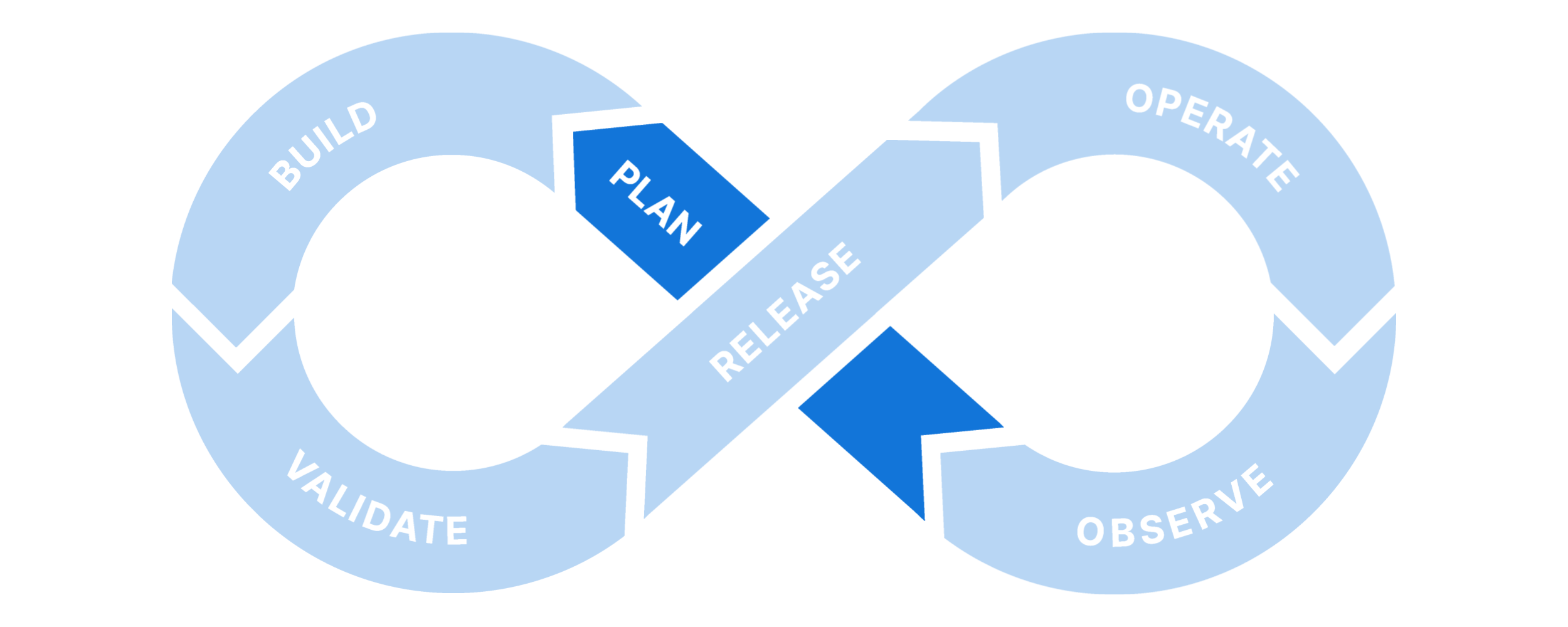
The Salesforce DevOps lifecycle describes how work moves through plan, build, validate, release, operate, and observe. Rather than a straight line, it’s a continuous loop, where decisions made early shape what happens later, and what teams learn in production feeds back into the next round of change.
Each stage has a different focus. Planning turns business needs into technical intent. Build and validate focus on implementing and checking those changes. Release is about safely moving them into production. Operate and observe are where teams run the org day to day, respond to issues, and understand how changes behave in the real world. Together, these stages are how Salesforce teams deliver value iteratively and safely.
The challenge is that gaps in understanding don’t stay contained to one stage. Limited visibility during planning shows up as rework during validation, blocked releases, or unexpected behaviour in production. Missed dependencies and legacy configuration become harder to untangle as work progresses through the lifecycle.
Org intelligence supports the lifecycle as a whole by providing a shared, accurate understanding of the org at every stage. Instead of compensating for missing information, teams work from the same view of org structure, dependencies, usage, and risk.
That shared context matters everywhere — but it has the greatest impact when teams are deciding what to change in the first place.
Common challenges in change planning
As orgs get more complex, even the most experienced technical users can find it difficult to predict how planned changes will behave. That complexity usually leads to three persistent problems that show up across the DevOps lifecycle:
- Long discovery. Teams often spend days digging through existing org metadata and automation just to understand an org’s structure and how a feature behaves today. This slows down early planning, especially in enterprise Salesforce development where teams are juggling global, complex orgs.
- Finding issues late-stage. Hidden dependencies are one of the most common sources of rework. A change looks safe until it reaches QA or deployment — and suddenly a test fails or a package doesn’t validate because something else relied on a field or a workflow.
- Accumulated tech debt. Unused fields, legacy Flows, old triggers, and duplicated automation accumulate over time. Without a way to see the scale of the problem, tech debt becomes harder to track and harder to address.
How org intelligence streamlines the plan stage
Salesforce teams often encourage a “shift left” approach because the earlier you can find a potential problem, the easier and cheaper it is to fix. But investing in the ‘plan’ stage of the DevOps lifecycle is how teams can avoid costly rework. This is the stage when teams translate business or user requirements into technical work.
Org intelligence solutions give teams the full context upfront. Instead of starting with a blank canvas, teams can see the functionality that’s already in place, rapidly understand bi-directional relationships and how different pieces of metadata depend on each other, and carry out thorough impact analysis. That means no more discovering a hidden automation during testing or learning about an unexpected dependency during deployment.
For teams working in the Salesforce platform across complex enterprise environments and business processes, this level of deep visibility becomes essential.
How org intelligence improves delivery across the DevOps lifecycle
The impact of org intelligence goes beyond quicker, easier planning — its benefits are felt across your entire release process:
- Quality improves even as teams move faster. The State of Salesforce DevOps 2025 report found that improving change quality is the area businesses value most about DevOps. By understanding the org upfront, teams avoid introducing errors and reduce the amount of rework they need to do later. That translates into higher-quality releases and more predictable delivery even when accelerating development.
- A better handle on technical debt. Technical debt can be largely invisible until it starts to cause performance issues or even failures in production. Org intelligence helps teams understand what’s unused, what’s risky, and what’s slowing down performance. That makes monthly cleanup cycles and permission reviews much more effective.
- Faster onboarding for new team members. New developers, admins, and architects can carry out org discovery rapidly, and easily see how components fit together rather than relying on siloed knowledge or reverse-engineering configuration manually.
- Quicker resolution of production errors. When something breaks unexpectedly, teams don’t have hours to trace back through automation or dependencies. Org intelligence gives support and engineering teams a direct view of how functionality is linked, making incident diagnosis and resolution faster and more reliable.
Bringing org intelligence into your workflow
Most Salesforce teams rely on a mix of tools and manual investigation to understand their orgs. Salesforce Optimizer, and Salesforce’s Tooling API dependency data, and built-in metadata and setup views (like Setup, Flow Builder, and the Schema Builder) all offer useful insights, but none provide the full context on their own.
AI-powered tools are also emerging, but reliability depends on having deep, structured Salesforce metadata awareness and org-specific context available. Without that, outputs can be incomplete or misleading.
What’s missing is a complete, contextual view of the org that plugs directly into the team’s existing DevOps workflow. That’s what true org intelligence aims to provide: a clear understanding of how the org is structured, how changes might behave, and where risks or opportunities sit across the environment.
Getting started with org intelligence tools
Introducing org intelligence into your process doesn’t require a major shift. It should enhance and improve your existing workflow. Here are some best practice approaches for layering org intelligence into your development processes:
- Establish a baseline view of your org. Start by enabling org intelligence on your production org and using the initial indexed view as a shared baseline. This creates a continuously updated reference for org structure, dependencies, permissions, and recent changes — giving teams a reliable starting point for planning and cleanup.
- Review metadata before planning a change. Before beginning work on a new feature or refactor, use org intelligence to check upstream and downstream dependencies, and recent change history. This helps avoid unexpected behaviour later in the release cycle.
- Use insights to inform code review, test planning, and deployment prep. Accurate dependency information, usage insights, and change context support more effective code reviews, guide targeted testing, and reduce deployment failures. This detail gives reviewers and release managers the information they need to make confident decisions.
- Track tech debt and permissions on a regular cadence. Understanding unused metadata, complex automation chains, and permission structures allows teams to take an iterative approach to clean-up. Monthly reviews prevent issues from accumulating and keep the org easier to maintain.
- Support incident response and root-cause analysis. When something breaks in production, org intelligence helps teams quickly identify which components are involved, what changed recently, and where to focus investigation. This shortens time to resolution and reduces reliance on siloed knowledge.
- Easily and regularly review permissions. Ensure least-privilege access by using org intelligence to understand how profiles and permission sets are used in practice, where excessive access has crept in, and which permissions are no longer needed. Regular reviews help teams stay aligned with security best practices, reduce unnecessary risk, and maintain a clear, auditable permission model.
Over time, this becomes part of how the team works — a natural step during planning, governance, and release management.
Gearset Org Intelligence, built for confident planning
Gearset Org Intelligence is designed to support the decisions Salesforce teams make before and during change. It gives teams a clear, shared understanding of what already exists in their org, so planning work starts from reality rather than assumptions.
Instead of jumping between Setup pages or relying on incomplete snapshots, teams can explore their metadata in one place and see how components relate to each other and how they’ve evolved over time. That context makes it easier to answer practical planning questions early: whether similar functionality already exists, what else a change might touch, and where risk is likely to sit.
Understanding dependencies is central to that planning work. For any given component, Org Intelligence shows both what it depends on and what depends on it. When a team is considering a change to a field, Flow, or Apex class, they can quickly see the potential downstream impact and factor that into scope, sequencing, and test strategy — before development begins.
Org Intelligence also helps teams plan with a clearer view of automation and access. By making relationships between metadata and permissions easier to follow, teams can anticipate knock-on effects, involve the right stakeholders earlier, and avoid last-minute surprises during validation or release.
The Gearset Agent supports this planning process by allowing teams to ask natural-language questions about their org and get answers grounded in real metadata and dependency context. That makes it easier to explore unfamiliar areas of the org, validate assumptions, and move from requirements to well-informed technical decisions.
Because Org Intelligence is built directly into Gearset’s DevOps workflow, this context stays available as work progresses — carrying planning decisions forward into build, validate, release, and beyond.
Plan and deliver Salesforce changes with confidence
Before testing or deployment, the plan stage is where requirements are translated into concrete changes — and where teams have the biggest opportunity to improve release outcomes. If teams can’t see what already exists in production, planning becomes guesswork, and the surprises arrive later when they’re harder to fix.
Gearset Org intelligence gives you the missing context up front: what’s in the org today, how it’s all connected, and what a change is likely to touch, so you can plan with confidence and deliver more predictable releases.
Book a demo to see how quickly you can have Org Intelligence making a difference in your development workflow, book a demo.